- HIPAA-compliant billing • BAA with every client
- Serving practices in all 50 states
OPHTHALMOLOGY BILLING • CATARACT CLAIMS • RETINA & DIAGNOSTIC CODING
We help eye-care practices separate medical and vision benefits get OCT & visual field claims paid reconcile 67028 and anti-VEGF drugs bill cataract surgery & post-op care clear aging eye-care A/R
Your Patients Deserve Clearer Vision. Your Practice Deserves Clearer Collections.
One eye-care practice can handle medical exams, diagnostic imaging, retinal injections and surgery — all under different reimbursement rules. SkyLine MB provides ophthalmology billing services that manage the billing details behind each of them.
LET'S TALK
Get a Free Ophthalmology Billing Review
Tell us about your eye-care practice and the claims you’d like us to review.
Please do not include patient names, diagnoses or protected health information.
EYE-CARE CODING
92004 • 92134 • 67028 • 66984
Eye, test, drug and global period checked.
OPHTHALMOLOGY BILLING, EXPLAINED
Ophthalmology medical billing services manage insurance claims and payment follow-up for medically necessary eye examinations, ophthalmic diagnostic testing, office procedures, retinal treatments and eye surgery.
What makes ophthalmology different is the mix of medical and vision-related services in one practice. Routine refraction may not be covered by Medicare, while an exam for an eye disease may qualify under medical insurance. OCT and visual fields carry their own medical necessity rules, cataract surgery adds global periods and laterality, and retinal injections involve both a procedure and a separately reported drug.
SkyLine MB helps eye-care practices review these differences and manage the claims, corrections and outstanding payments that follow.
Reviewed by the SkyLine MB billing & coding team · Last updated October 2026
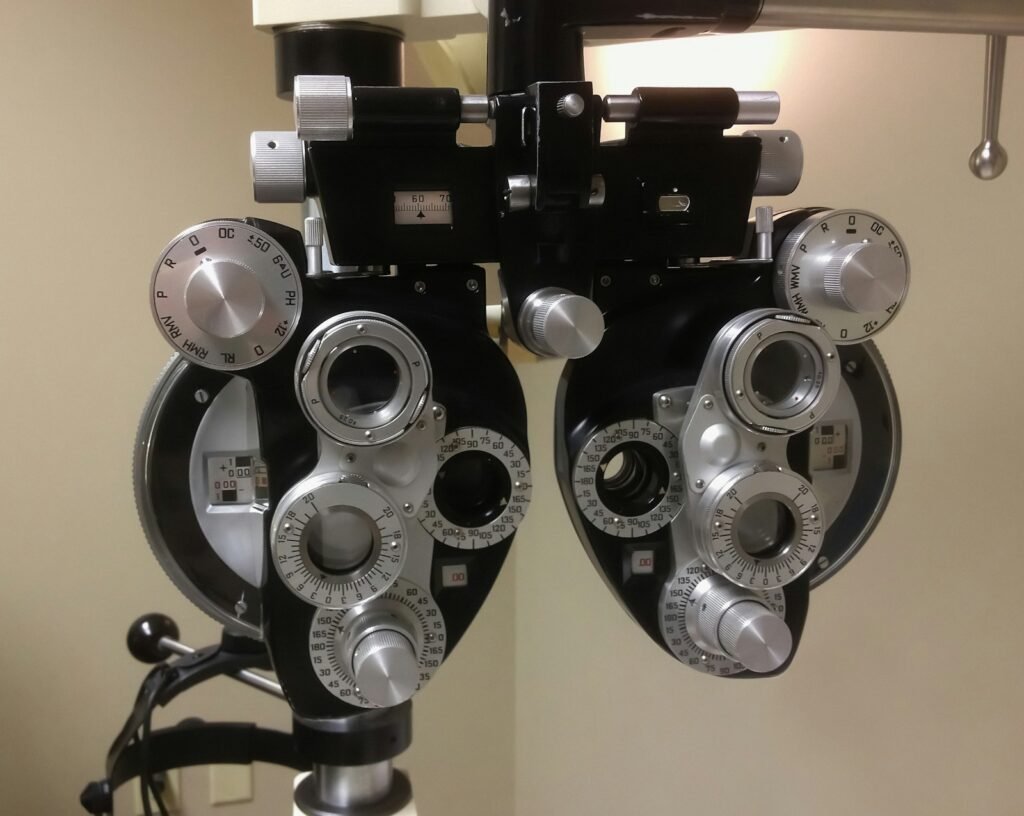
Eye-care claims need a closer look
Billing support that recognizes the difference between an exam, a test, a drug and a surgical procedure.
EYE-CARE REVENUE CYCLE SUPPORT
One encounter can lead to several services. An exam may lead to retinal imaging; imaging may support a treatment decision; an injection patient may need authorization for the next dose, and a cataract patient needs post-op services reviewed separately.
The patient experiences connected care, but the insurer processes each service under different rules. A visit code must match the documented exam, a test needs interpretation and medical necessity, an injection claim must reflect the procedure and the drug, and a surgical claim must carry the correct eye and post-op period.
SkyLine MB helps ophthalmology practices review billing information, submit supported claims, investigate denials and reconcile payments. With 10 years of medical billing experience, we help your clinical team spend less time on the administrative aftermath of completed visits.
The care may be continuous. The billing rules aren’t. We help you manage the differences.
WHAT WE HANDLE
Connected ophthalmology billing services for exams, diagnostics, injections and surgery.
01
Start with the right coverage information.
We verify medical eye-care benefits, vision plan details and patient responsibility, separating medical, routine vision, testing and surgical coverage.
02
Retinal treatments, specialty drugs, imaging and surgery may need approval.
We review authorization details, approved services and dates, and coordinate discrepancies with your staff.
03
The documented service should determine the code.
We review eye visits, E/M, OCT, visual fields, retina and cataract procedures and modifiers — see the ophthalmology code table.
04
Prevent avoidable errors from interrupting reimbursement.
We prepare claims with the right patient, provider, diagnosis, procedure and modifier data, and correct rejections.
05
Find out why the payer refused payment.
We work diagnosis mismatches, missing authorizations, medical necessity, global period and drug billing denials.
06
Unpaid scans, injections and surgical claims need consistent attention.
We monitor balances, identify aging claims and prioritize payer follow-up.
07
Don’t assume a processed claim was paid correctly.
We post payments, reconcile adjustments and review procedure and medication reimbursement for retinal treatments.
08
Keep providers ready for the networks they serve.
We assist with credentialing, payer applications, CAQH and enrollment follow-up.
09
See clearly what is still owed.
We support patient balances, statements and reports on payment trends, denials and service categories.
EYE EXAMS, DIAGNOSTICS & PROCEDURES
Common ophthalmic services. Actual billing depends on the service performed, documentation, medical necessity and payer policy.
| CPT code | Common service | Billing concern |
|---|---|---|
| 92002 | Intermediate ophthalmological service, new patient | Exam content and documentation |
| 92004 | Comprehensive ophthalmological service, new patient | Required comprehensive exam elements |
| 92012 | Intermediate ophthalmological service, established patient | Appropriate examination level |
| 92014 | Comprehensive ophthalmological service, established patient | Exam elements and medical necessity |
| 92015 | Determination of refractive state | Medicare exclusion and patient responsibility |
| 92083 | Extended visual field examination | Test extent, interpretation and coverage |
| 92133 | OCT imaging, optic nerve | Glaucoma indication and frequency rules |
| 92134 | OCT imaging, retina | Retinal diagnosis, necessity and frequency |
| 92250 | Fundus photography with interpretation and report | Documentation and coding edits |
| 67028 | Intravitreal injection of a pharmacologic agent | Procedure coding and separate drug reporting |
| 66984 | Cataract extraction with intraocular lens insertion | Surgical documentation, laterality and global period |
| 65855 | Laser trabeculoplasty | Procedure, eye treated and coverage rules |
Descriptions shortened for website use. CPT and HCPCS codes, diagnosis requirements, laterality, claim edits and payment policies must be verified against current official references before submission. CPT® is a registered trademark of the American Medical Association.
2026 MEDICARE & PAYER CONSIDERATIONS
Benefit type, diagnostic necessity, drugs and post-op care each decide what gets paid.
Medicare generally doesn’t cover routine refraction under CPT 92015, while a medically necessary eye exam can qualify.
Eye visit codes and E/M codes have different selection rules — pick by documentation, never by payment.
OCT of the retina (92134) or optic nerve (92133), visual fields and fundus photos aren’t automatically payable.
Coverage depends on diagnosis, frequency, interpretation and coding relationships.
67028 doesn’t cover the anti-VEGF drug — the HCPCS code, units, authorization and JW/JZ must agree.
Cataract claims (66984) need laterality and 90-day global rules; premium lenses need separate financial handling.
Based on CPT ophthalmology guidelines, Medicare coverage rules for refraction and diagnostic testing, CMS global surgery and JW/JZ policies, and payer drug policies.
LATERALITY, GLOBAL PERIODS & MEDICATIONS
Modifiers aren’t interchangeable. Laterality, postoperative reporting and discarded-drug requirements depend on the service and payer.

| Modifier | What it communicates | Why it matters |
|---|---|---|
| RT | Service on the right eye, when applicable | Correct laterality |
| LT | Service on the left eye, when applicable | Correct laterality |
| 24 | Unrelated E/M during the postoperative period | Appropriate additional medical care |
| 25 | Significant, separately identifiable E/M on a procedure day | Documentation supporting separate reporting |
| 54 | Surgical care only | Documented division or transfer of care |
| 55 | Postoperative management only | Documented transfer of post-op responsibility |
| 58 | Staged or related procedure during the post-op period | Supported planned or related care |
| 78 | Unplanned return to the OR for a related procedure | Global-period requirements |
| 79 | Unrelated procedure during the post-op period | Unrelated surgery during another global period |
| JW | Discarded drug amount from a single-dose container | Drug-specific units and documentation |
| JZ | No discarded amount, when required | Appropriate Medicare drug reporting |

OPHTHALMOLOGY PRACTICES WE SUPPORT
We organize billing around the eye-care services your practice actually delivers:
Operating in a surgery center? See our ASC billing services.
COMMON OPHTHALMOLOGY BILLING PROBLEMS
Small details on eye, benefit, test and drug decide whether a claim pays.
Medical insurance and routine vision coverage follow different rules.
Test information may not meet the payer’s coverage requirements.
The procedure and medication need separate claim details.
A second eye or added service needs the right documentation and modifier.
Many eye diagnoses and procedures must identify the eye involved.
Small testing balances and large surgical balances pile up together.
OPHTHALMOLOGY CLAIM READINESS
A claim should reflect more than the scheduling description. We check that these records support what is being billed:
For retinal injection patients, the authorization must match the medication, dose and service date. Our prior authorization support helps coordinate those requirements with your clinical team.
Ophthalmology claim readiness tracker
ILLUSTRATIVE
OUR PROCESS
Built around exams, diagnostics, injections and surgery.
01
We review providers, services, payer mix, systems and open A/R.
02
We confirm how exam, imaging, injection and surgical records reach billing.
03
Codes, laterality, benefits, drug units and global periods are checked.
04
Payments are reconciled; denials and underpayments are worked.
05
Monthly reports by exam, test, injection and surgery category.
WHY SKYLINE MB
Structured revenue cycle support for specialty practices.
Benefits separated before claims go out.
OCT, visual field and fundus photo rules reviewed.
67028, HCPCS units and JW/JZ kept in agreement.
RT/LT, 54/55 and post-op periods checked on every case.
Revenue by exam, test, drug and surgery category.
BILLING SUPPORT COMPARISON
Your practice may already have an experienced front desk and an established ophthalmology EHR. Outsourcing doesn’t need to replace that foundation.
It provides dedicated support for the diagnostic, surgical and medication claims that demand closer attention.
| Ophthalmology billing consideration | Internal billing | General medical billing vendor | SkyLine MB ophthalmology support |
|---|---|---|---|
| Medical vs. vision billing | Depends on staff experience | General benefit verification | Eye-care coverage review |
| Eye visit and E/M codes | Internal coding responsibility | General E/M workflows | Ophthalmic code review |
| OCT and visual field testing | Test-specific knowledge needed | Depends on specialty experience | Diagnostic claim review |
| Retinal injection drug claims | Medication reconciliation | Varies by contract | Procedure and drug billing review |
| Cataract post-op care | Global surgery expertise | General surgical coding | Post-op and modifier review |
| Outstanding eye-care A/R | Internal payer follow-up | Depends on scope | Insurance claim investigation |
PAYERS, COMPLIANCE & SOFTWARE
OCT, visual fields, fundus photography and other ophthalmic tests may carry coverage indications, frequency limits and coding edits. Surgical and injection claims add procedure, drug unit and discarded-drug requirements.
Claims are billed only for services actually performed and documented; clinical decisions stay with the treating ophthalmologist. SkyLine MB follows applicable HIPAA requirements, signs a Business Associate Agreement and uses role-based access.
Works inside your EHR & PM system
Struggling with eye-care denials or unpaid injections?
Request a free ophthalmology billing review. We’ll look at exams, OCT, drug claims, cataract post-op billing and aged A/R.
EYE-CARE REVENUE REPORTING
Reporting by exam, test, injection and surgery category.
Exams, imaging, injections and surgeries awaiting charges.
Claims rejected before processing, and why.
Exam, diagnostic, retina, drug and cataract denials.
Outstanding insurance revenue by category and location.
Retinal injection and medication payment gaps.
Collected vs. collectible under payer agreements.
OPHTHALMOLOGY BILLING FAQS
Ophthalmology billing services support insurance reimbursement for medical eye examinations, diagnostic imaging, retinal injections, cataract surgery and other eligible eye-care procedures. They can include eligibility checks, coding review, claim submission, denial resolution, payment posting and A/R follow-up.
Ophthalmology practices commonly bill medical insurance for covered eye disease diagnosis, treatment and surgery. Routine vision services may follow separate vision benefit arrangements. The appropriate claim depends on the service, provider, coverage and payer policy.
Common ophthalmic examination codes include 92002, 92004, 92012 and 92014. Ophthalmologists may also use applicable office/outpatient E/M codes when the service and documentation meet those requirements.
Medicare generally does not cover routine refraction reported with CPT 92015. A medically necessary eye examination may be covered under different rules, so coverage and patient responsibility should be reviewed for each service.
OCT billing depends on the anatomical area and documented test. CPT 92133 commonly relates to optic nerve imaging, while CPT 92134 relates to retinal imaging. Medical necessity, interpretation, frequency and payer policies affect reimbursement.
CPT 67028 identifies an intravitreal injection procedure. When permitted, the administered medication may require separate drug coding and supporting information.
Drug billing depends on the medication administered, its current HCPCS code, reporting units, payer authorization and applicable wastage rules. The procedure and medication should be reconciled against the treatment documentation.
Cataract extraction procedures such as CPT 66984 generally have a 90-day Medicare global surgical period. Certain postoperative services are included, while separately reportable services must meet applicable rules.
Modifier 54 identifies surgical care only, while modifier 55 identifies postoperative management only under qualifying transfer-of-care arrangements. Documentation and payer requirements determine appropriate use.
Yes. We support retina and glaucoma practices with diagnostic testing claims, procedural claims, authorization information, payment posting and denial follow-up.
Yes. We investigate outstanding surgical claims, review denial explanations, coordinate corrections and pursue eligible payer follow-up subject to documentation and filing requirements.
Yes. We assess your current EHR and billing workflow during consultation to determine access needs, compatibility and the right service arrangement.
Pricing depends on the number of providers, locations, claim volume, mix of examinations and procedures, payer arrangements and the billing services required. Contact SkyLine MB for a free consultation and a customized proposal.
RELATED SERVICES
Medical vs. vision benefits.
Injections, imaging and surgery.
Exam, OCT and laterality review.
Necessity, global and drug denials.
Unpaid tests and surgeries.
Ophthalmologist enrollment.
Related specialties:
GET STARTED
Ophthalmology combines preventive and medical eye care, specialized diagnostics, recurring retinal treatment and surgical services. Those revenue streams shouldn’t disappear into one unmanaged billing queue.
Whether you run a comprehensive ophthalmology clinic, a retina practice or a cataract surgery group, SkyLine MB can discuss the billing responsibilities that deserve closer attention.
Your team protects your patients’ sight. Give your practice a clearer view of its financial performance.