- HIPAA-compliant billing • BAA with every client
- Serving practices in all 50 states
RADIOLOGY BILLING • IMAGING CLAIMS • 26/TC MODIFIER REVIEW
We help imaging practices bill 26, TC & global correctly match CT & MRI authorizations resolve imaging denials review MPPR & bundling edits clear aging imaging A/R
Your Imaging Equipment Is Working. Is Your Revenue Cycle Keeping Up?
An MRI is completed and the radiologist signs the report. But the payment may still be stuck behind an authorization mismatch, an incorrect component modifier or a reimbursement adjustment nobody has investigated.
LET'S TALK
Get a Free Radiology Billing Review
Tell us about your imaging practice and the claims you’d like us to review.
Please do not include patient names, diagnoses or protected health information.
COMPONENT BILLING
26 • TC • Global
Right entity, right component, right claim.
RADIOLOGY BILLING, DEFINED
Radiology medical billing services manage the insurance claims and reimbursement for diagnostic imaging, radiologist interpretations and eligible image-guided procedures.
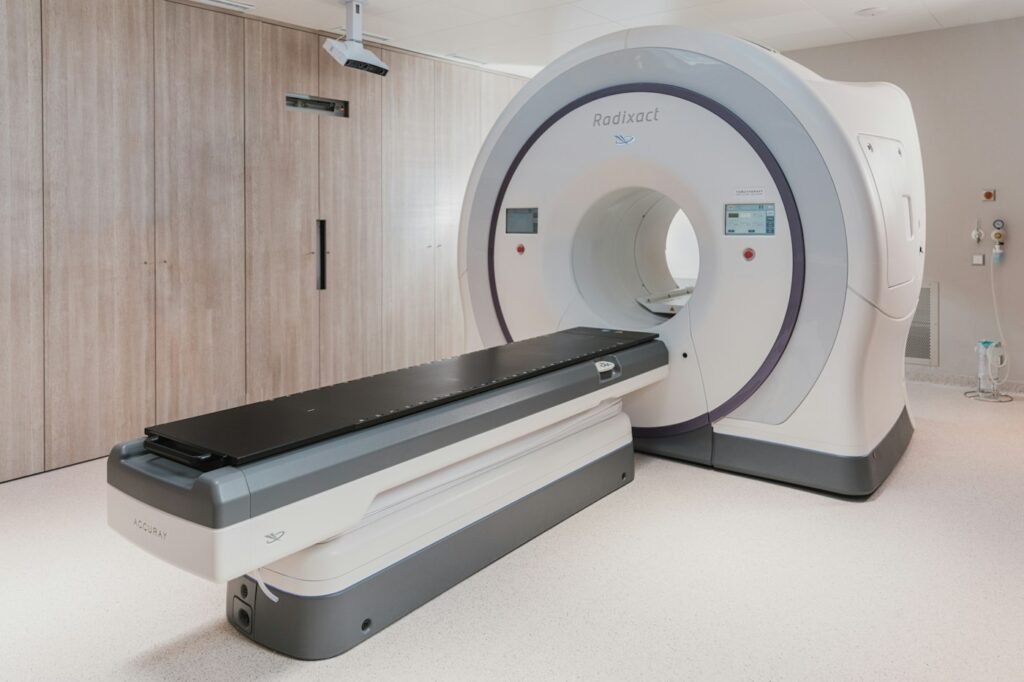
What makes radiology different is how a service can be divided between the physician interpreting the study and the organization performing it. An imaging center may supply the equipment, technologists and supplies, while a separate radiologist provides the interpretation. Depending on the arrangement, these components are billed separately (modifiers 26 and TC) or together as a global service.
That distinction affects who can bill, which modifiers are required and how payment is calculated. SkyLine MB reviews these details, prepares supported claims and investigates payment issues before they become long-standing receivables.
Reviewed by the SkyLine MB billing & coding team · Last updated October 2026

Every study has a billing story
We connect performed exams, signed interpretations, accurate claims and payment follow-up.
RADIOLOGY REVENUE CYCLE SUPPORT
A busy radiology department can process hundreds of studies while unresolved claims quietly accumulate. A CT may be authorized under a different procedure code. An interpretation may carry the wrong component modifier. A second study may receive a payment reduction that needs reconciliation against the payer’s rules.
Individually these look like routine adjustments. Across a high-volume practice, they deserve closer attention.
At SkyLine MB, our radiology medical billing services connect the clinical and financial records behind each study. With 10 years of medical billing experience, we support coding review, claim submission, prior authorization coordination, denial management, payment reconciliation and A/R follow-up.
For independent radiologists, that may mean professional-component claims and unpaid interpretation fees. For freestanding imaging centers, technical or global billing and advanced imaging authorizations. For multi-location practices, coordination across locations, providers and payer arrangements.
One specialty. Different billing models. A revenue cycle that accounts for both.
WHAT WE HANDLE
Your imaging team handles acquisition and interpretation. SkyLine MB coordinates the financial process that follows.
01
A scheduled scan doesn’t always mean imaging benefits are confirmed.
We review active coverage, diagnostic imaging benefits, patient responsibility and payer requirements that may affect the claim.
02
MRI, CT, PET and other advanced imaging may require payer authorization.
We track approved procedure codes, service locations and expiration dates, and coordinate discrepancies with your staff.
03
The procedure, contrast details, interpreting provider and billing entity must all be reflected accurately.
We review imaging codes, 26/TC requirements and payer claim details — see the radiology CPT table.
04
Radiology claims involve high volumes and multiple service locations.
We prepare electronic claims, check billing information, monitor payer responses and correct rejected submissions.
05
An authorization denial needs a different response than a component error or a bundling denial.
We review payer responses and records to identify the right correction, reconsideration or appeal.
06
Completed studies can stay unpaid when claims need more information, corrections or payer follow-up.
We organize aging balances and prioritize unresolved accounts.
07
We post payments, reconcile balances and review potential underpayments against remittance and contract data.
Applicable imaging payment reductions are considered when investigating billed-versus-paid differences.
08
Enrollment and billing identifiers affect claim processing across facilities and groups.
We assist with credentialing administration, enrollment follow-up and provider information updates.
09
We organize reporting around claims, reimbursements, denials and unpaid balances.
Provider- and facility-level views are included where data is available.
DIAGNOSTIC IMAGING CODING
The right code depends on the anatomical area, modality, contrast use and exact exam. The wrong one can mean a rejection, an incorrect payment or an authorization mismatch.
| CPT code | Imaging study | Common claim consideration |
|---|---|---|
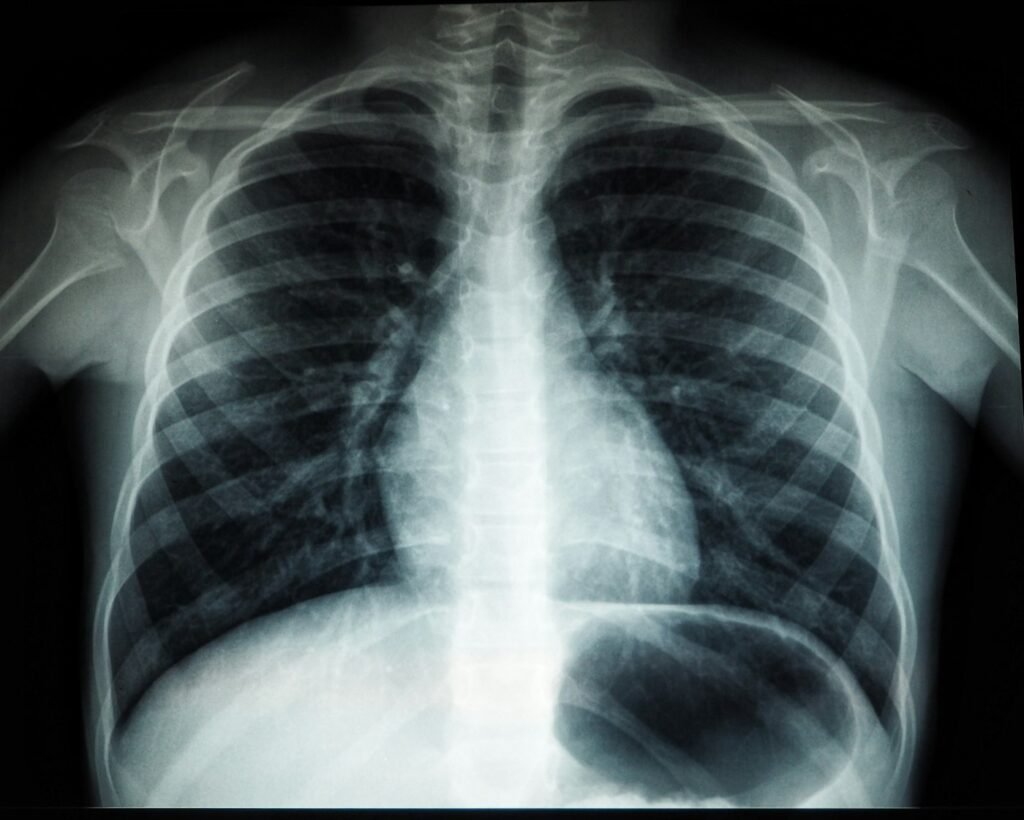
| 71046 | Chest X-ray, two views | View count and eligible component billing |
| 70450 | CT head/brain without contrast | Contrast status and authorization details |
| 70553 | MRI brain without and with contrast | Contrast sequence and approved procedure |
| 71260 | CT chest with contrast | Contrast documentation and procedure selection |
| 72148 | MRI lumbar spine without contrast | Anatomical region and coverage requirements |
| 74177 | CT abdomen and pelvis with contrast | Combined study coding and contrast details |
| 76700 | Complete abdominal ultrasound | Documentation supporting a complete exam |
| 76856 | Nonobstetric pelvic ultrasound, complete | Exam scope and documented structures |
| 77067 | Bilateral screening mammography | Screening versus diagnostic billing |
| 78815 | PET with concurrently acquired CT, skull base to mid-thigh | PET/CT coding and coverage requirements |
Representative, simplified descriptions — not a complete radiology code set. Protocols, component eligibility, code edits, medical necessity and current payer instructions determine billing. CPT® is a registered trademark of the American Medical Association.
PROFESSIONAL, TECHNICAL & GLOBAL BILLING
Who furnished each component — and in what setting — determines how the service may be reported.
Generally the physician’s interpretation and report. A radiologist reading a hospital-performed CT may bill the professional component.
Interpreting an image doesn’t entitle the radiologist to bill the technical portion.
Generally the equipment, personnel and technical resources used to perform the test.
In eligible freestanding settings, the entity furnishing it may bill TC under Medicare and payer rules.
Where permitted, an entity that furnishes and is entitled to bill both components may bill the service globally.
Arranging the exam alone doesn’t make global billing appropriate.
Based on CMS Medicare Claims Processing Manual Ch. 12 & 13, NCCI policy and the Medicare Physician Fee Schedule. Annual CPT updates and quarterly NCCI edits apply by date of service.
MODIFIER ACCURACY
For many imaging practices the most important distinction is 26, TC or eligible global billing. Other modifiers depend on circumstances — and should never be used just to bypass an edit.
| Modifier | Billing purpose | What needs attention |
|---|---|---|
| 26 | Professional component | Interpreting-provider eligibility and correct component reporting |
| TC | Technical component | Entity furnishing the technical service and setting |
| 59 | Distinct procedural service, where appropriate | Documentation and permitted use under coding edits |
| XE | Separate encounter | Whether a genuinely separate encounter supports it |
| XP | Separate practitioner | Distinct practitioner circumstances under policy |
| XS | Separate structure | Anatomically distinct service requirements |
| XU | Unusual non-overlapping service | Whether services are sufficiently distinct |
| 76 | Repeat procedure, same physician | Documentation supporting a reportable repeat |
| 77 | Repeat procedure, another physician | Documentation and payer rules for repeats |
IMAGING ORGANIZATIONS WE SUPPORT
Imaging organizations bill in different ways, and each model has its own risks. We support:
Related specialty: imaging-heavy practices often pair this with our cardiology billing services.
COMMON RADIOLOGY REIMBURSEMENT PROBLEMS
Small mismatches between the exam, the report and the claim become big numbers at imaging volume.
The authorization may reference a different code, location or exam than the one performed.
Professional claims hit problems with modifiers, enrollment, duplicates or claim data.
Not every reduction is a denial — some are contractual or MPPR adjustments.
A wrong contrast-related code affects authorization matching and payment.
Some same-encounter procedures aren’t separately reimbursable.
High imaging volume makes unresolved balances hard to track.
STUDY-TO-CLAIM RECONCILIATION
The examination performed, the interpretation and the insurance claim need to tell one consistent story:
When these disagree, payment is delayed even though the exam was completed. We identify discrepancies and coordinate the follow-up — including authorization corrections through our prior authorization support.
Imaging claim readiness
ILLUSTRATIVE
OUR PROCESS
Built around the way your imaging organization bills — professional, technical or global.
01
We map who furnishes and bills each component across your locations, providers and payers.
02
We confirm what RIS, PACS, EHR and PM data is available for charge capture and claims.
03
Codes, contrast, 26/TC/global, authorizations and edits are reviewed before submission.
04
We post payments, separate expected reductions from underpayments and work denials.
05
Monthly reports show denials, A/R and reimbursement by modality, component and facility.
WHY SKYLINE MB
Structured revenue cycle support for practices that need more than high-volume claim entry.
We review 26, TC and global billing against who actually furnished each part of the service.
Approved codes, locations and dates checked against the performed exam.
Expected MPPR and contractual reductions separated from payments that need follow-up.
We use the exam, provider and report data your systems already hold.
See denials and reimbursement by modality, component and facility.
CHOOSING THE RIGHT BILLING SUPPORT
Not every radiology organization needs the same arrangement. An independent radiologist may mainly need interpretation claims managed. A freestanding imaging center may need technical claims, prior authorization coordination, patient balances and detailed payment reporting.
The comparison shows where those responsibilities differ.
| Billing consideration | Internal billing team | General medical biller | SkyLine MB radiology support |
|---|---|---|---|
| Professional and technical claims | Depends on staff expertise | May need extra guidance | 26/TC and global billing review |
| Advanced imaging authorizations | Managed internally | Depends on contract | Authorization coordination |
| CT and MRI coding | Requires imaging knowledge | General coding workflow | Imaging-specific charge review |
| NCCI and MPPR issues | Internal research | Depends on expertise | Edit and payment reduction review |
| High-volume imaging A/R | Needs dedicated resources | Depends on capacity | Outstanding claim follow-up |
| Facility and radiologist reporting | Requires coordinated systems | Varies by vendor | Reporting from available claim data |
PAYERS, COMPLIANCE & SOFTWARE
Requirements vary by modality, billing entity, network, plan and procedure. Enrollment — radiologist, group, facility or IDTF — is handled within the agreed scope and subject to payer approval.
We code from the documented exam and report — never by substituting an unsupported diagnosis to obtain payment. SkyLine MB follows applicable HIPAA requirements, signs a Business Associate Agreement and uses role-based access to imaging and billing data.
Works inside your EHR & PM system
Not sure where your imaging revenue is slipping?
Request a free radiology billing review. We’ll look at component billing, authorizations, denials and aged A/R.
REPORTING THAT GOES BEYOND CLAIM COUNTS
Numbers organized by modality, component and facility.
Completed exams awaiting information or charges.
First-pass acceptance for CT, MRI, X-ray and ultrasound.
Authorization, component, necessity, edits and more.
Balances by aging period, payer, provider or facility.
Collected vs. collectible revenue.
Professional, technical and global payment trends.
RADIOLOGY BILLING FAQS
Radiology billing services support claims and reimbursement for diagnostic imaging, physician interpretations and eligible interventional procedures. They can include coding review, insurance verification, authorization coordination, claim submission, payment posting, denial management and A/R follow-up.
Modifier 26 identifies the professional component of an eligible diagnostic service, generally the physician’s interpretation. Modifier TC identifies the technical component, which generally covers the resources used to perform the test. The correct arrangement depends on the service, setting, payer rules and the entity entitled to bill.
Global billing reports both the professional and technical components together when an eligible entity furnishes and is permitted to bill the complete service. Not every setting or provider arrangement qualifies.
Many commercial plans require prior authorization for certain advanced imaging, including CT and MRI. Requirements vary by payer, plan, exam and medical necessity criteria.
Yes. We can support eligibility verification, imaging claims, technical or global billing where applicable, denial follow-up and payment posting for independent imaging centers.
MPPR stands for Multiple Procedure Payment Reduction. Medicare applies specified payment reductions when certain imaging services are performed together under applicable circumstances. The rules depend on the procedures and components involved.
Frequent causes include authorization mismatches, incorrect CPT codes, missing or inappropriate modifiers, medical necessity concerns, duplicate claims, bundling edits and provider enrollment discrepancies.
Yes. We can support radiologists and groups billing the professional interpretation component, including modifier 26 claims and insurance follow-up.
We can review the billing needs of interventional radiology practices. Complex procedures require qualified coding expertise, documentation review and attention to bundling and guidance-code rules; scope is confirmed before onboarding.
Outsourcing can reduce internal billing workload, make claim follow-up more consistent and improve visibility into outstanding payments. Results depend on current performance, payer arrangements, documentation and the services outsourced.
We assess your existing systems and available billing information during consultation. Compatibility depends on the software, access permissions and agreed workflow.
Pricing depends on imaging volume, billing components, provider and facility arrangements, payer mix and service scope. Contact SkyLine MB for a free consultation and a customized proposal.
RELATED SERVICES
CT, MRI and PET approvals tracked.
Imaging code and component review.
Imaging benefits checked pre-exam.
Component, edit and auth denials.
Unpaid studies followed up.
Radiologist & facility enrollment.
Related specialties:
GET STARTED
You’ve invested in imaging equipment, qualified radiologists, skilled technologists and facilities patients depend on. Unresolved claims and preventable billing errors shouldn’t undermine that investment.
Whether you need help with interpretation claims, imaging-center revenue cycle management or a growing backlog of denials, SkyLine MB is ready to discuss what needs attention.
Your images are clear. Let’s make your revenue picture clearer, too.