- HIPAA-compliant billing • BAA with every client
- Serving practices in all 50 states
DERMATOLOGY BILLING • BIOPSIES • EXCISIONS • MOHS • COSMETIC VS. COVERED
We help dermatology practices code biopsies by technique bill excisions by size report Mohs stages right separate cosmetic services clear aging derm A/R
Every Lesion Has Its Own Coding Story. Your Claims Should Tell It Correctly.
Biopsies, destructions, excisions, repairs and Mohs surgery are coded by technique, size, location and number of lesions — and cosmetic services must be kept apart from covered care. SkyLine MB provides dermatology billing services that handle coding review, claims, denials and A/R.
LET'S TALK
Get a Free Dermatology Billing Review
Tell us about your dermatology practice and the claims you’d like reviewed.
Please do not include patient names, diagnoses or protected health information.
EVERY LESION IS COUNTED
11102 • 17000 • 17311 • 25 / 59
Technique, size, site and lesion count checked together.
DERMATOLOGY BILLING, EXPLAINED
Dermatology billing services — also called dermatology medical billing — manage insurance claims and reimbursement for skin, hair and nail evaluations, biopsies, lesion destruction, excisions, wound repairs, Mohs micrographic surgery, phototherapy and other covered dermatologic care.
Dermatology coding depends on details that are easy to miss: the biopsy technique (tangential, punch or incisional), the excised diameter including margins, whether a lesion is benign or malignant, the anatomic site, the number of lesions and the repair type. Many dermatology procedures also carry a 0- or 10-day global period that affects follow-up visits.
Cosmetic services add another layer: they must be separated from medically necessary care and handled with the right financial agreements before treatment. SkyLine MB reviews the records that connect documentation, coding, coverage and payment.
Reviewed by the SkyLine MB billing & coding team · Last updated October 2026
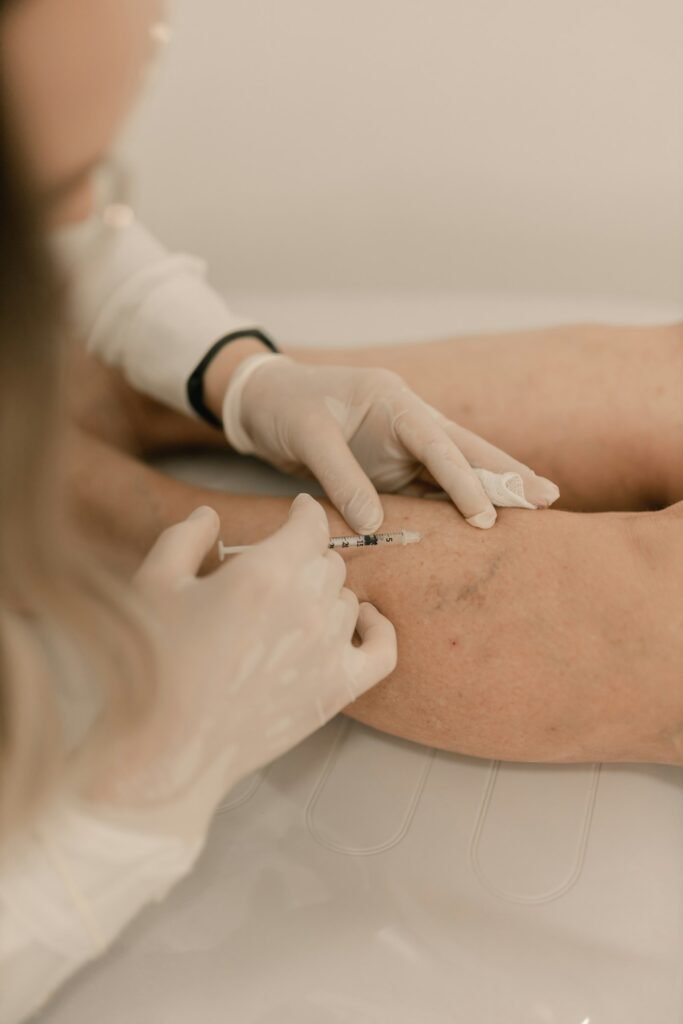
Every lesion has a billing checklist
Connecting the procedure note, pathology report, payer rules and payment follow-up.
DERMATOLOGY REVENUE SUPPORT
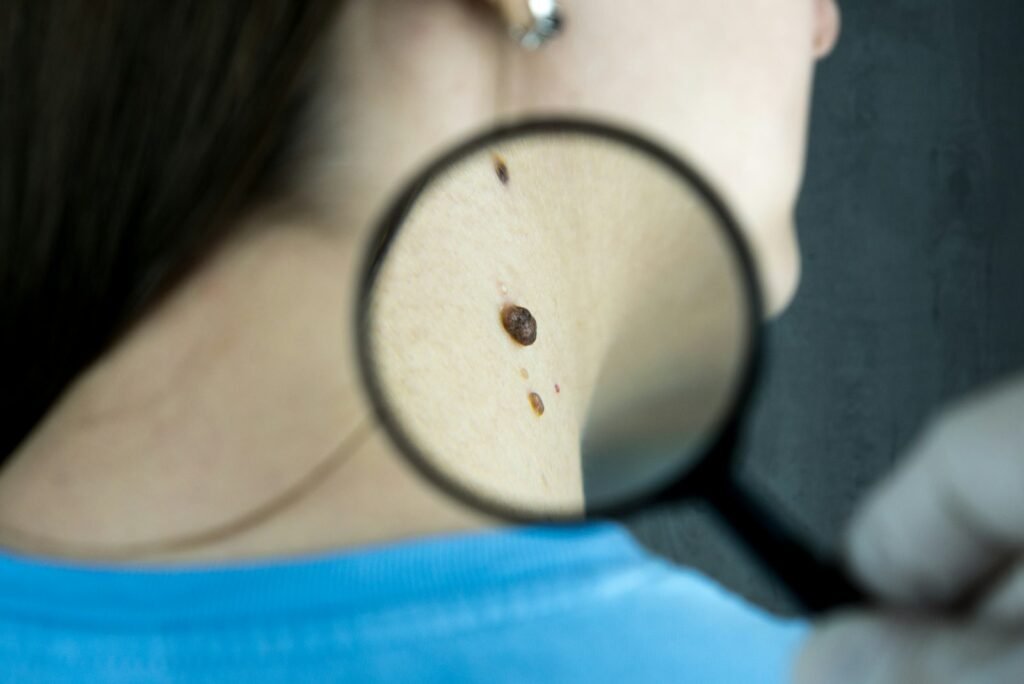
One patient has a shave biopsy of a suspicious mole. Another has twelve actinic keratoses destroyed. A third has a basal cell carcinoma removed with Mohs surgery and closed with an adjacent tissue transfer. Each visit is coded differently — and each can be denied for a different reason.
Excision codes change with the final pathology and the excised diameter. Destruction codes change with the lesion count. Mohs codes change with the anatomic area, the number of stages and the number of tissue blocks. A billing process that only enters the procedure name misses those details.
SkyLine MB reviews procedure notes, pathology results, claims, remittances and denial explanations. With 10 years of medical billing experience, we also flag repeating issues — such as modifier 25 denials on the same payer — so your team can fix the cause, not just the claim.
Dermatology reimbursement shouldn’t depend on finding the missing measurement after the insurer says no.
SPECIALTY REVENUE CYCLE SERVICES
Nine connected dermatology billing services, from coverage checks before the visit to payment follow-up after it.
01
Know what is covered before the patient is seen.
We check active coverage, specialist benefits, referrals, copays and deductibles.
02
Some treatments need approval first.
We coordinate authorizations for biologics, phototherapy and selected surgical procedures, and track expiry dates.
03
The note should support every lesion and size.
We review technique, diameter, site, pathology and modifiers — see the dermatology code table.
04
Turn complete procedure records into clean claims.
We prepare claims with the right diagnosis linkage per lesion and correct clearinghouse rejections.
05
Find the reason before resubmitting.
We work modifier 25, bundling, global period and medical necessity denials with corrections or appeals.
06
Don’t let surgical balances age quietly.
We monitor open claims and report A/R by payer, procedure type and aging bucket.
07
Paid isn’t always paid correctly.
We post payments and check multiple-procedure reductions and fee-schedule variances.
08
Keep providers billable as you grow.
We assist with payer enrollment, CAQH updates and adding Mohs surgeons or PAs to plans.
09
Clear statements for covered and self-pay care.
We support statements, patient questions and reporting that separates cosmetic from insurance revenue.
DERMATOLOGY CODING REFERENCE
Biopsy technique, lesion count, excised diameter, pathology, anatomic area and repair type all change how a service is reported.
| CPT | Representative service | Billing consideration |
|---|---|---|
| 11102 | Tangential biopsy of skin, single lesion | Technique documented; 11103 for each additional lesion |
| 11104 | Punch biopsy of skin, single lesion | Punch technique; 11105 for each additional lesion |
| 11106 | Incisional biopsy of skin, single lesion | Incisional technique; 11107 for each additional lesion |
| 11300–11313 | Shave removal of lesions | Site and lesion diameter; not the same as a biopsy |
| 17000 | Destruction of premalignant lesion, first lesion | Lesion count drives 17003 and 17004 |
| 17003 | Destruction, 2nd through 14th lesion, each | Units equal the additional lesions destroyed |
| 17004 | Destruction of 15 or more lesions | Reported alone, not with 17000/17003 |
| 11400–11446 | Excision of benign lesion | Excised diameter including margins and site |
| 11600–11646 | Excision of malignant lesion | Final pathology confirms malignancy |
| 12001–12057 | Simple and intermediate repairs | Repair type, total length and anatomic group |
| 13100–13153 | Complex repairs | Documentation of complexity beyond layered closure |
| 14000–14061 | Adjacent tissue transfer or rearrangement | Defect size and site; repair is included |
| 17311 | Mohs surgery, head/neck/hands/feet/genitalia, first stage | Up to five tissue blocks; 17312 each added stage |
| 17313 | Mohs surgery, trunk/arms/legs, first stage | Up to five tissue blocks; 17314 each added stage |
| 17315 | Mohs, each additional block beyond five | Block count documented per stage |
| 96910–96922 | Photochemotherapy and laser treatment for skin disease | Coverage criteria and treated surface area |
Descriptions are abbreviated. Code ranges must be matched to the exact documented service. Add-on codes, global periods, multiple-procedure rules and NCCI edits apply. CPT® is a registered trademark of the American Medical Association.
DERMATOLOGY CODING RULES
Most dermatology coding errors come from one of three places: technique, size or count.
Excision codes are selected by the excised diameter — the lesion plus the narrowest margins required — measured before the excision.
A note that only gives the pathology specimen size can lead to the wrong code.
Since 2019, skin biopsies are coded by technique: tangential (11102), punch (11104) or incisional (11106), each with its own add-on code.
When different techniques are used, the hierarchy rules decide which primary code is reported.
Destruction of premalignant lesions changes code at 15 lesions, and Mohs is reported by stage and tissue block.
Each count must be documented, not estimated.
Based on current CPT® guidelines for integumentary procedures, Medicare global surgery rules and NCCI policy. Commercial payer policies vary.
MODIFIER & PROCEDURE REPORTING
Dermatology has one of the highest volumes of same-day E/M and procedure combinations, which makes modifier 25 and separate-lesion modifiers frequent audit targets. Modifiers must reflect the documentation — never be added just to bypass an edit.
| Modifier | Typical purpose | What requires review |
|---|---|---|
| 25 | Significant, separately identifiable E/M on the day of a procedure | Work beyond the decision to perform the minor procedure |
| 59 | Distinct procedural service | Separate lesion, site or session, and NCCI edit rules |
| XS | Separate structure or organ | A different lesion or anatomic site |
| 51 | Multiple procedures | Payer reporting rules and payment reductions |
| 58 | Staged or related procedure during the global period | Planned staging, such as a delayed repair |
| 78 | Unplanned return to the OR for a related procedure | Complication-related return during the global |
| 79 | Unrelated procedure during the postoperative period | A new, unrelated lesion or condition |
| GA | Waiver of liability (ABN) on file | Valid ABN signed before a likely noncovered Medicare service |
| GY | Item or service statutorily excluded | Cosmetic services that Medicare never covers |

DERMATOLOGY PRACTICES WE SUPPORT
We organize billing around the dermatology services your practice actually delivers:
Treating chronic wounds as well? See our wound care billing services.
COMMON DERMATOLOGY BILLING PROBLEMS
Each one has a different root cause — and a different fix.
The E/M didn’t show work beyond the minor procedure decision.
The excised diameter with margins wasn’t documented.
A malignant code was billed before pathology came back benign — or the reverse.
A follow-up visit fell within the 10-day global of an excision or destruction.
A cosmetic treatment was billed as covered care.
High-value surgical claims stall on records requests and bundling edits.
LESION CLAIM READINESS
A dermatology claim should connect three sets of information:
Practices with many same-day visit and procedure combinations benefit from regular coding review. When the same payer keeps denying modifier 25, our denial management services investigate the cause and support eligible corrections or appeals.
Dermatology claims tracker
ILLUSTRATIVE
OUR PROCESS
Built around procedure notes, pathology and payer policies.
01
We review providers, locations, procedure mix, cosmetic services, payers and open A/R.
02
We confirm how notes, photos, pathology reports and authorizations reach billing.
03
Technique, diameter, lesion count, global periods and modifiers are checked before submission.
04
Payments are reconciled; denials and underpayments are worked.
05
Monthly reports by procedure family, payer, provider and location.
WHY SKYLINE MB
Structured revenue cycle support for procedure-heavy specialties.
Diameter, length and lesion counts checked against the note.
Excision codes aligned with final pathology before or after submission.
Follow-up visits reviewed against 0- and 10-day globals.
Self-pay services kept out of insurance claims.
Denials and A/R by procedure family, payer and provider.
DERMATOLOGY BILLING SUPPORT COMPARISON
Many dermatology practices have capable front-desk and billing staff.
The question is whether that team — or a general vendor rather than a dedicated dermatology billing company — has time to measure every excision against the note, track global periods and keep up with modifier 25 policies on every payer.
| Billing priority | In-house team | General billing provider | SkyLine MB dermatology support |
|---|---|---|---|
| Biopsy and excision coding | Depends on coder experience | General coding support | Technique, diameter and pathology review |
| Modifier 25 claims | Often billed by habit | Varies by expertise | Note review for separate E/M work |
| Mohs surgery | Stage and block counting | May need specialist support | Stage, block and repair review |
| Global periods | Easy to miss on busy days | Depends on workflow | Global tracking before follow-up billing |
| Cosmetic services | Mixed with covered care | Depends on setup | Separate self-pay workflow and reporting |
| Denials and A/R | Competes with daily work | Depends on agreement | Denial investigation and payer follow-up |
PAYERS, COMPLIANCE & SOFTWARE
Coverage varies by diagnosis, payer and service. Medicare does not cover cosmetic procedures, and some payers limit services such as removal of benign lesions to documented symptoms or medical indications. Biologic therapies for psoriasis or atopic dermatitis may fall under medical or pharmacy benefits with separate authorization rules. Pathology may be billed by your practice or by an outside lab.
Claims are billed only for services actually performed and documented; questions about size, technique or medical necessity go back to the treating provider. Clinical photos and records are handled under HIPAA. SkyLine MB signs a Business Associate Agreement and uses role-based access.
Works inside your EHR & PM system
Are biopsy, excision or modifier 25 claims coming back denied?
Request a free dermatology billing review. We’ll look at coding by size and technique, global periods, modifiers and aged A/R.
SPECIALTY REVENUE REPORTING
Reporting by procedure family, payer, provider and location.
Encounters held for pathology, measurements or missing notes.
Claims accepted without rejection, and the preventable errors behind the rest.
Biopsy, destruction, excision, repair and Mohs denials tracked separately.
Same-day E/M denials by payer and provider.
Unpaid claims and aging by insurer, procedure and provider.
Collected vs. collectible under payer agreements and adjustments.
DERMATOLOGY BILLING FAQS
Dermatology billing services manage insurance claims for skin evaluations, biopsies, lesion destruction, excisions, repairs, Mohs surgery and other covered dermatologic care. Services typically include eligibility checks, coding review, claim submission, denial management, payment posting and A/R follow-up.
Dermatology codes change with biopsy technique, lesion size and site, the number of lesions, final pathology and repair type. Same-day E/M and procedure combinations, global periods and cosmetic exclusions add further rules.
Skin biopsies are coded by technique: tangential biopsy (11102), punch biopsy (11104) or incisional biopsy (11106), with add-on codes 11103, 11105 and 11107 for each additional lesion. The documented technique decides the code.
Excision codes are based on the excised diameter — the greatest clinical diameter of the lesion plus the narrowest margins required — measured before the excision, not the size of the pathology specimen.
Modifier 25 is used when a significant, separately identifiable E/M service is performed on the same day as a minor procedure. The E/M documentation must show work beyond the usual pre-procedure evaluation.
Mohs surgery is reported by anatomic area and stage: 17311 and 17312 for the head, neck, hands, feet and genitalia, and 17313 and 17314 for the trunk, arms and legs. Code 17315 is added for each tissue block beyond five in a stage. Repairs are reported separately.
CPT 17000 reports the first premalignant lesion destroyed, 17003 each lesion from the second through the fourteenth, and 17004 reports 15 or more lesions on its own.
Cosmetic services are generally not covered. For Medicare, statutorily excluded services can be reported with modifier GY when a claim is needed, and patients should know their financial responsibility before treatment.
Yes. We can support professional and technical pathology billing, including 26 and TC modifiers where a split applies, and matching pathology results to procedure claims.
Yes. We can coordinate authorization requests for biologics and phototherapy, track approval dates and visit limits, and flag renewals before they expire.
Yes. We work inside your existing EHR and practice management system wherever possible and confirm access and workflow during onboarding.
Pricing depends on provider count, procedure mix, claim volume, cosmetic services, payers and the scope of support. Contact SkyLine MB for a free consultation and a customized proposal.
RELATED SERVICES
Size, technique and lesion counts.
Modifier 25 and bundling denials.
Biologics and phototherapy.
Specialist benefits and referrals.
Aging surgical claims worked.
Dermatologist and PA enrollment.
Related specialties:
GET STARTED
Your dermatologists measure, biopsy and treat with precision. Your billing process needs the same precision: the right technique, the right size, the right count and the right modifier.
Whether your practice focuses on medical dermatology, Mohs surgery or a mix of medical and cosmetic care, SkyLine MB can review procedure claims, catch coding gaps, investigate denials and monitor outstanding reimbursement.
Treat every lesion carefully. Give every claim the same care.