- HIPAA-compliant billing • BAA with every client
- Serving practices in all 50 states
GASTROENTEROLOGY BILLING • COLONOSCOPY & EGD • 2026 MEDICARE RULES
We help GI practices bill screening colonoscopies apply PT, 33 & KX correctly code EGD & polypectomy resolve bundling denials clear aging GI A/R
One Procedure Can Change the Entire Claim. Your Billing Should Be Ready.
Screening colonoscopies, polyp removals, upper endoscopies and GI infusions each follow their own billing rules. SkyLine MB provides gastroenterology billing services that manage the coding, claims and reimbursement behind them.
LET'S TALK
Get a Free GI Billing Review
Tell us about your GI practice and the procedure claims you’d like reviewed.
Please do not include patient names, diagnoses or protected health information.
SCREENING TO THERAPEUTIC
G0121 • 45385 • PT / 33 / KX
Intent, findings and modifier checked together.
GI BILLING, EXPLAINED
Gastroenterology medical billing services manage insurance claims and reimbursement for consultations, colorectal cancer screening, diagnostic colonoscopy, upper GI endoscopy, therapeutic endoscopic procedures and other covered digestive health services.
What makes GI billing different is how the original reason for a procedure interacts with what happens during it. A screening colonoscopy may stay routine, include a biopsy or polyp removal, or a diagnostic exam may be ordered for symptoms. They look alike on the schedule but carry different coding and payer rules — and EGD, multiple procedures, pathology and infusions add more.
SkyLine MB helps GI practices review procedure records, select supported billing information, submit claims and investigate unresolved payments.
Reviewed by the SkyLine MB billing & coding team · Last updated October 2026
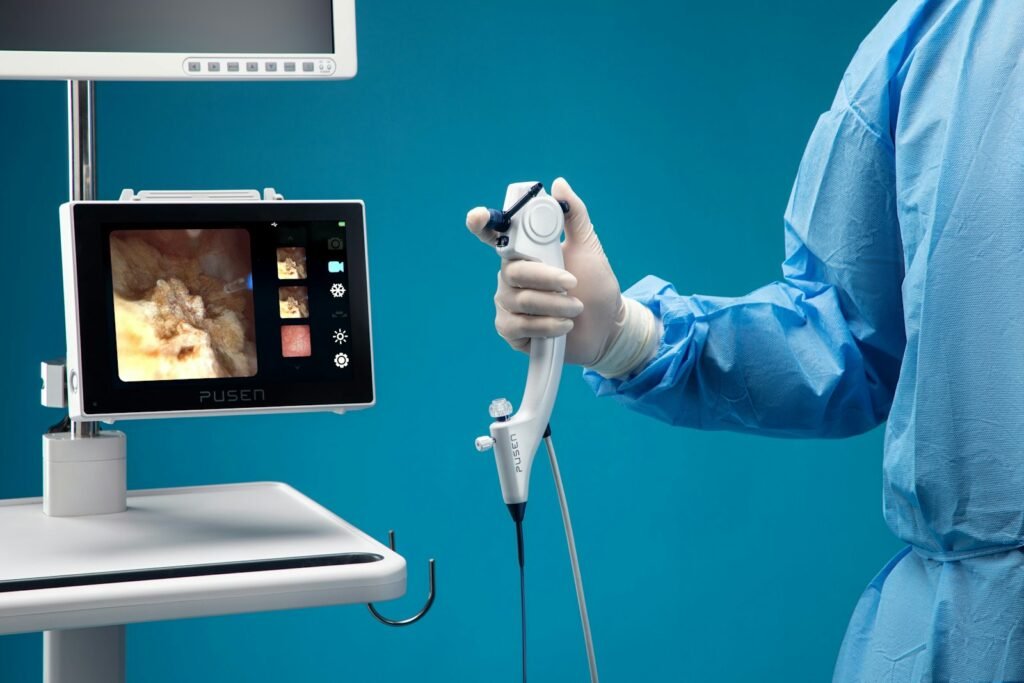
A closer look at every GI claim
Connecting procedure intent, findings, coding requirements and the payment that follows.
GI REVENUE CYCLE SUPPORT
A GI practice may run screening colonoscopies, diagnostic workups and therapeutic procedures in the same morning. Each case needs more than a code copied from the schedule.
The billing record should show why the procedure was performed, what the physician found, which services were completed, and whether the claim belongs to the physician, a facility or another provider. Even patient responsibility changes under screening rules.
SkyLine MB connects scheduled procedures, clinical records, claims and remittances. With 10 years of medical billing experience, we cut repeated payer calls for single-provider clinics and organize billing across physicians, locations and payers for larger endoscopy groups.
A completed procedure should produce a complete billing record — not a new administrative mystery.
GI-SPECIFIC SERVICES
Nine connected GI billing services for colonoscopy, endoscopy and digestive care claims.
01
Know how the payer treats the planned procedure.
We review active coverage, screening benefits, patient responsibility and coverage requirements.
02
The approved procedure should match the service performed.
We review approved procedures, locations and dates, and coordinate discrepancies with staff.
03
The endoscopy report determines the claim.
We review colonoscopy, EGD, biopsy and polypectomy coding and modifiers — see the GI code table.
04
Complete procedure details help claims move.
We prepare claims with patient, provider, procedure, diagnosis and insurance data, and correct rejections.
05
Was it screening, coding, authorization or coverage?
We work modifier, bundling, necessity and documentation denials with corrections or appeals.
06
Completed procedures shouldn’t sit unpaid.
We track outstanding claims, review aging and follow up on pending, denied and underpaid accounts.
07
Know what was paid — and why.
We post ERA/EOB payments, adjustments and patient balances, and investigate underpayments against contracts.
08
Provider and facility arrangements affect claims.
We assist with payer enrollment, CAQH and provider updates across service locations.
09
Clear patient bills and reliable owner reports.
We track balances and report on screening claims, procedure payments and denial trends.
GI PROCEDURE CODING REFERENCE
The procedure documented — not simply the exam originally scheduled — determines which code is reported.
| CPT / HCPCS | Common GI service | Key billing consideration |
|---|---|---|
| G0105 | Medicare screening colonoscopy, high-risk patient | Screening eligibility and frequency |
| G0121 | Medicare screening colonoscopy, not high risk | Preventive coverage requirements |
| 45378 | Diagnostic flexible colonoscopy | Indication and exam performed |
| 45380 | Colonoscopy with biopsy, single or multiple | Biopsy documentation and coding edits |
| 45385 | Colonoscopy with polyp/lesion removal by snare | Removal method and screening modifier |
| 43235 | Diagnostic upper GI endoscopy (EGD) | Scope and service documentation |
| 43239 | EGD with biopsy, single or multiple | Biopsy documentation and bundling |
| 43249 | EGD with balloon dilation of esophagus | Dilation technique and details |
| 43251 | EGD with polyp/lesion removal by snare | Removal method and documentation |
| 91110 | Capsule endoscopy, esophagus through ileum | Coverage and study requirements |
| 91010 | Esophageal motility study with interpretation | Study type and documentation |
| 99213–99215 | Established-patient office/outpatient E/M | Supported MDM or qualifying time |
Simplified descriptions. Code selection, modifiers, frequency limits and reimbursement depend on current CPT/HCPCS rules, complete procedure documentation and payer requirements. CPT® is a registered trademark of the American Medical Association.
MEDICARE & COMMERCIAL BILLING RULES
The reason for the colonoscopy, the findings and the treatment all matter. Accurate billing accounts for every one of them.
When a polyp is removed during a qualifying Medicare screening, the polypectomy code may carry modifier PT.
Commercial plans often use modifier 33 for preventive screening — but rules for biopsies and polypectomies vary by payer.
A follow-up colonoscopy after a qualifying positive noninvasive screening test may need KX with G0105 or G0121 under CMS rules.
This is a different use of KX from the Medicare therapy threshold.
For 2026, Medicare generally applies 15% coinsurance when tissue or a polyp is removed during screening — the Part B deductible doesn’t apply.
Under NCCI, a diagnostic endoscopy is generally included in a surgical endoscopy in the same session.
Based on CMS colorectal cancer screening policy (PT, KX, G0105/G0121), the Consolidated Appropriations Act, 2021 coinsurance phase-down, NCCI endoscopy rules and commercial payer preventive policies.
SCREENING & ENDOSCOPY MODIFIER REVIEW
Physician and ASC facility discontinued-procedure modifiers aren’t interchangeable. Not every modifier applies to every GI service, and none should be added just to bypass a payer edit.

| Modifier | When it may apply | What must be reviewed |
|---|---|---|
| PT | Medicare screening colonoscopy converted to diagnostic or therapeutic | Screening intent and procedure performed |
| 33 | Preventive service reporting, often for commercial plans | Payer policy and preventive circumstances |
| KX | Follow-up screening colonoscopy after a positive noninvasive test | Screening sequence and CMS requirements |
| 59 | Distinct procedural service, where appropriate | Documentation and coding edits |
| XE | Separate encounter | Evidence of a distinct encounter |
| XS | Separate anatomical structure | Whether separate reporting is allowed |
| 51 | Multiple procedures, when applicable | Payer instructions and multiple-endoscopy rules |
| 53 | Discontinued procedure (physician) | Reason and stage of discontinuation |
| 73 | ASC procedure discontinued before anesthesia | ASC facility requirements |
| 74 | ASC procedure discontinued after anesthesia or start | ASC facility documentation |

GI PRACTICE TYPES
We organize billing around the GI services your practice delivers:
Procedures in a surgery center? See our ASC billing services.
GI BILLING CHALLENGES
Screening rules and endoscopy edits create denials routine billing misses.
A biopsy or polypectomy changes the claim and patient responsibility.
Colonoscopy after a positive stool test needs extra Medicare reporting.
Two procedures in one exam aren’t always two payable lines.
An advanced procedure may differ from what was approved.
Physician and facility bill under different payment systems.
Drug treatment adds authorization, drug and administration coding.
PROCEDURE-TO-CLAIM REVIEW
For GI billing, the appointment description isn’t enough to decide the final claim. The record should answer:
When a payer denies a colonoscopy or endoscopy claim for coding, documentation or screening-modifier reasons, our denial management services investigate, correct and follow up.
GI claim readiness tracker
ILLUSTRATIVE
OUR PROCESS
Built around screening rules, endoscopy reports and payer edits.
01
We review physicians, locations, procedure mix, payers and open A/R.
02
We confirm how procedure reports and pathology reach billing.
03
Indication, codes, PT/33/KX and bundling are checked before submission.
04
Payments are reconciled; denials and underpayments are worked.
05
Monthly reports by procedure, physician, payer and location.
WHY SKYLINE MB
Structured revenue cycle support for procedure-heavy specialties.
PT, 33 and KX applied to the right screening situation.
Diagnostic, biopsy and polypectomy combinations checked against NCCI.
Professional claims kept distinct from ASC and hospital charges.
Screening coinsurance explained before surprise bills reach patients.
Revenue by procedure category, physician and location.
BILLING SUPPORT COMPARISON
An experienced in-house team may already handle most daily claims well.
Outsourcing helps when procedure-specific coding, unresolved denials and payer follow-up need more attention than your staff can consistently give.
| Billing requirement | In-house GI billing | General medical billing company | SkyLine MB GI billing support |
|---|---|---|---|
| Screening vs. diagnostic colonoscopy | Depends on staff expertise | General coding review | Screening-intent and procedure review |
| Medicare PT / KX modifiers | Needs current policy knowledge | May need GI guidance | Applicable modifier review |
| EGD and polypectomy coding | Internal coding responsibility | Depends on specialist capability | GI procedure and bundling review |
| ASC vs. physician claims | Billing-entity distinctions | Varies by arrangement | Professional claim and setting review |
| IBD treatment authorizations | Managed by staff | Depends on contract | Authorization tracking support |
| Outstanding GI claims | Internal payer follow-up | Varies by scope | Denial investigation and A/R follow-up |
PAYERS, COMPLIANCE & SOFTWARE
One endoscopy can generate claims from the gastroenterologist, a hospital or ASC, and an anesthesia provider — each under different payment rules. Coverage differs for preventive screening, diagnostic endoscopy, advanced procedures, consultations and infusions.
Claims are billed only for procedures actually performed and documented; indication and findings questions go back to the treating gastroenterologist. SkyLine MB follows applicable HIPAA requirements, signs a Business Associate Agreement and uses role-based access.
Works inside your EHR & PM system
Are colonoscopy or endoscopy claims coming back denied?
Request a free GI billing review. We’ll look at screening modifiers, bundling edits, authorizations and aged A/R.
GASTROENTEROLOGY BILLING METRICS
Reporting by procedure, physician, payer and location.
Colonoscopies, EGDs and visits awaiting documentation or claims.
Rejections involving PT, 33, KX and screening eligibility.
Biopsy, polypectomy and multiple-endoscopy adjustments.
Unpaid colonoscopy, EGD, advanced and visit balances.
Collected vs. collectible under payer arrangements.
Payments by procedure, physician, payer or location.
GI BILLING FAQS
Gastroenterology billing services manage insurance claims for digestive health consultations, colonoscopy, upper endoscopy, therapeutic GI procedures and other covered services. They can include insurance verification, procedure coding, claim submission, denial management, payment posting and A/R follow-up.
GI billing requires attention to the original reason for a procedure, its findings, therapeutic interventions, screening modifiers, endoscopy bundling and different physician and facility payment arrangements.
A screening colonoscopy is generally performed for preventive colorectal cancer screening. A diagnostic colonoscopy investigates symptoms, findings or other clinical concerns. Coding depends on the indication, the procedure performed and payer rules.
G0105 identifies a qualifying high-risk Medicare screening colonoscopy. G0121 identifies screening colonoscopy for an eligible patient who does not meet the high-risk criteria. Frequency and other requirements depend on Medicare policy.
Modifier PT may be required for a qualifying Medicare colorectal cancer screening that becomes a diagnostic or therapeutic procedure, such as when a polyp is removed.
Modifier 33 identifies an applicable preventive service. It is commonly relevant to certain commercial screening colonoscopy claims, but its use depends on the payer and circumstances.
Medicare requires KX in specified circumstances for a screening colonoscopy that follows a qualifying positive noninvasive colorectal cancer screening test. The exact rules depend on the test, the procedure and current CMS guidance.
Not necessarily. Under 2026 Medicare rules, a qualifying screening colonoscopy with no intervention may have no patient cost-sharing, but when tissue or a polyp is removed, 15% coinsurance may apply. The Part B deductible does not apply, and other plans can differ.
Not automatically. A surgical endoscopy code may already include the diagnostic portion of the exam. The services actually performed and applicable coding edits determine whether additional reporting is allowed.
Yes. We support GI professional billing and related revenue cycle workflows for practices working in endoscopy facilities. ASC facility billing is defined under a separate service arrangement.
Yes. We support advanced endoscopic claims with coding review, insurance requirements, denials and payment follow-up. Complex procedures are reviewed by qualified specialist coders.
Yes. We review your practice management and endoscopy documentation systems to determine available billing data, access requirements and compatibility.
Pricing depends on the number of providers, procedure volume, service locations, payer mix, advanced endoscopy complexity and the billing responsibilities required. Contact SkyLine MB for a free consultation and a customized proposal.
RELATED SERVICES
Screening modifiers and bundling.
Colonoscopy and EGD denials.
Screening benefit checks.
Advanced endoscopy and infusions.
Unpaid procedures followed up.
Gastroenterologist enrollment.
Related specialties:
GET STARTED
A successful GI practice depends on accurate procedures and an organized financial process. Screening rules, endoscopic findings, physician and facility claims, and payer requirements all affect reimbursement.
Whether you run a single GI clinic, an endoscopy-focused group or a multi-location practice, SkyLine MB can discuss the billing work that deserves more consistent attention.
The procedure is complete. Let’s make sure the claim gets the review and follow-up it needs.